Fund Raising
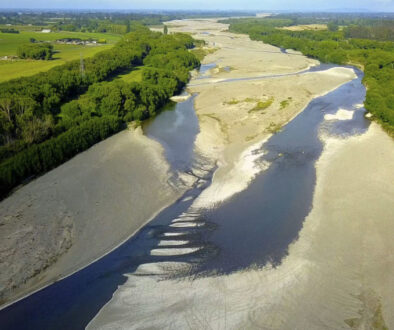
The Ashley Rakahuri Rivercare Group (ARRG) was formed in 1999 as an initiative of Environment Canterbury. The aim of this group was to look after the birds that nest along the river between State Highway One and the Okuku junction – 19km of river. Since then, we have extended our activities to trapping around the estuary. The task has become too difficult and we must engage a fulltime employee.
The species we primarily look after are the black-fronted tern, wrybill, banded dotterel, pied oystercatcher, and pied stilt. Other than the stilt, which is a native species, all are endemic to New Zealand. All but the stilt are endangered, the others could be described as on the path to extinction. Most endangered is the black-fronted tern (BFT): there are some 5,000 to 10,000 remaining and they are categorized as Nationally Endangered. This is the second highest categorization used by DOC.
These birds are essentially only present on the Ashley River during the nesting season, approximately September to February. They come here to breed. A quick look at the river in most places during these months will probably reveal just a few birds flying around. On closer inspection it is different, there is a wonderland of birds out there. This species assemblage can only be found on the east coast of the South Island of New Zealand and the Ashley River is the most accessible place to see them. In no other places in the world do such species breed on braided rivers. They nest in several different ways, for example, black-billed gulls nest in tight colonies, sometimes with as many as 7 nests per square metre. At the other extreme, wrybills are very territorial and usually nest at approximately 200m intervals along the river
Each year ARRG does a bird count from the Okuku junction to the estuary. In November 2025 we counted 1,700 birds of these species. The river is heavily modified, artificially narrowed by stop-banks and trees, mined for gravel, and infested by weeds, but it still has this abundance of native birds. The land either side of the river is totally modified – farmland and urban areas with almost no native vegetation and very few native birds to be seen. Rangiora has on its doorstep something precious that needs to be much better cared for.
Bird numbers on the Ashley are mainly controlled by weed cover. These species only nest on bare gravel, and in periods with few large floods, the gravel can be almost completely covered by lupin and other weeds. When there is a weed issue, ARRG, mechanically and by hand clear areas where nesting is expected. Nesting season floods are a major problem. All that ARRG can do about them is encourage the authorities to give the river more room to move – there is considerable scope to do this within the stop-banks.
ARRG and ECan have been very successful in reducing the amount of human disturbance, especially by vehicles, in the nesting season. This is done by blocking access to the river, informative signage, agreement with the Combined Four-wheel Drive clubs, and by education and publicity.
It is however, predators that are the main problem. This is a perhaps intractable issue and it is becoming increasingly clear that our efforts are not good enough – we are not reducing predator numbers and are not protecting the birds. We maintain a network of traplines for about 13 km either side of the river with traps at 100m intervals. Similar trapping at the estuary means we have about 500 traps permanently installed and checked by more than 25 trappers. Each season we do temporary trapping around nesting areas, particularly at BFT colonies – so far this year we have had traps at 166 locations. Despite this effort, each year we lose entire BFT colonies to predators. This year a Little Owl destroyed a colony of 52 nests, last year two Norway rats destroyed a 13-nest colony and a single cat destroyed a 28-nest colony. Fledgling productivity of BFT can be as little as one per ten nests – this species averages 2 eggs per nest. The other species are not so badly affected by predation. Bird numbers on the Ashley are not declining, but it is the breeding outcomes by which we should measure success or failure.
ARRG work bears comparison with the best professional work done on braided rivers in the country. We do not just blindly trap and hope, our work is underpinned by extensive monitoring to attempt to understand and react to the problems. We interface with DOC, ECan and consultants working in the field to make sure our work is up to scratch. We encourage academic studies to be done on the river to increase our understanding of the problems and find possible solutions to them. In the near future a PhD student will begin work, she is funded under a scholarship
Until recently ARRG has been an entirely volunteer group. We are partly self-funded through trap sales, have a small amount of sponsorship, and receive some funding from ECan, mainly through the Zone Committee for such projects as weed clearing. In the last few months for the first time, we have had an employee working with us. Funding for this was initially from the Rata and Waitaha funds, but was sufficient to last for only a few months. Recently a very generous sponsor has pledged $5,000 per month on a short-term basis – this will allow for a few more months of employment, but what is required is at least one full-time, permanent employee.
Our employee has proved to be extremely capable. She has appropriate academic qualifications, has the necessary technical skills, is physically capable of the demanding work, but most importantly has the attitude, enthusiasm and dedication required. ARRG faces a problem with aging volunteers who do not have the necessary skills or capabilities to do the work. It is critical that we boost the volunteer work with that of an employee, and we have that person.
We need to raise funds to make the bird life on our home river and estuary something for the district to be proud of. It should be possible to make the highly accessible 19km reach of the Ashley-Rakahuri a haven for the braided river birds. We cannot rely on volunteers or the various funds to provide enough money to pay an employee on a long-term basis, and are asking you to step forward.