Creating bird habitat
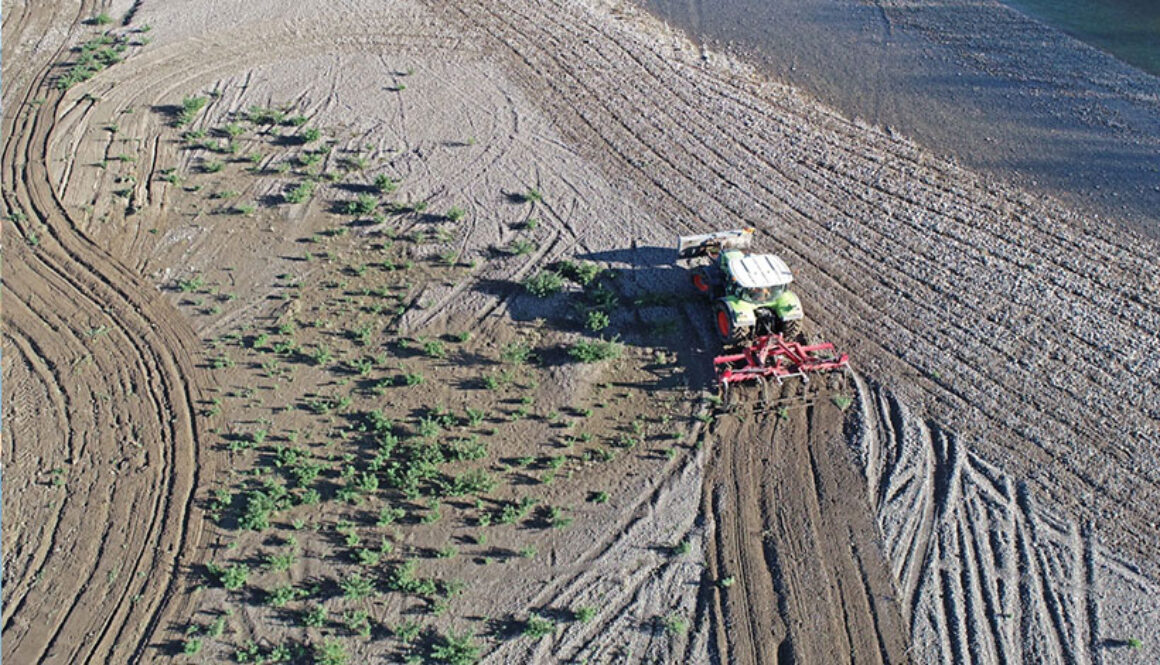
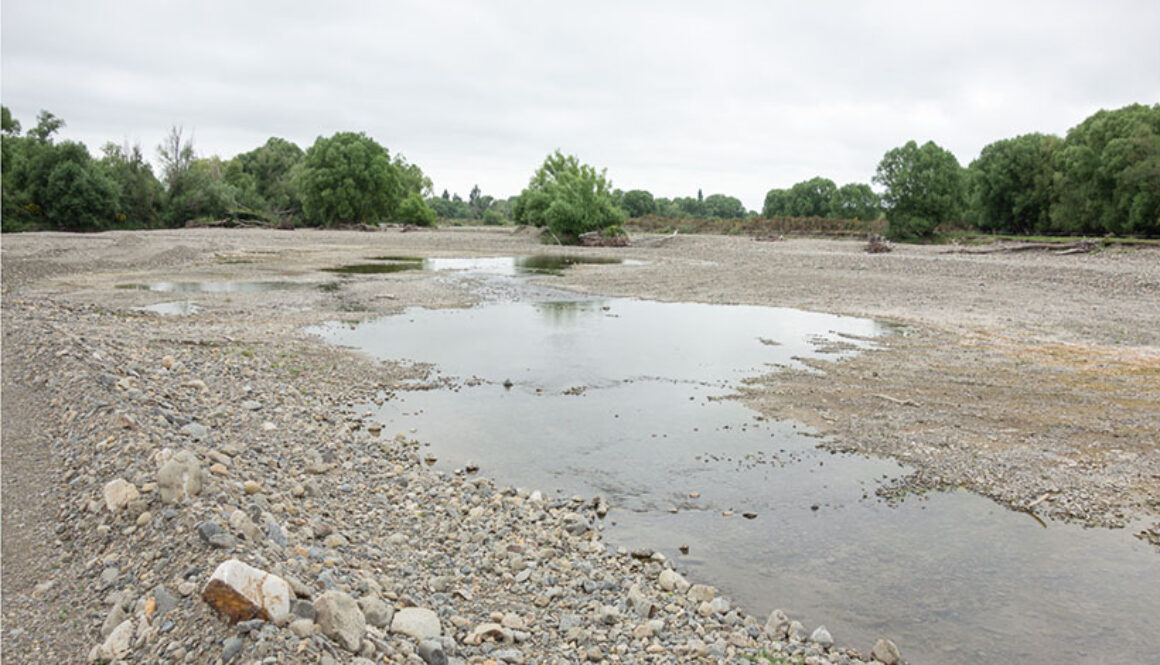
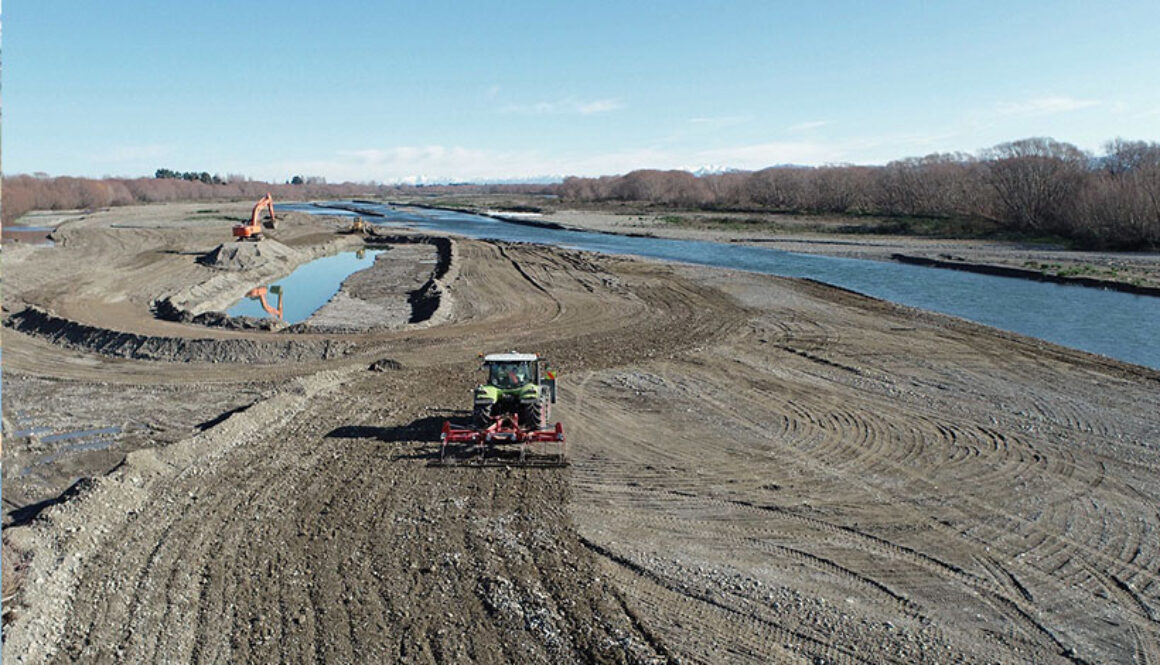
Title image: prior to the bird breeding season, commercial shingle extraction in the Ashley-Rakahuri river has cleared away weeds, and started to dig the channel which will create an island where the tractor is working. The tractor-mounted undercutter is making the site more attractive for bird breeding by roughing up the shingle surface.
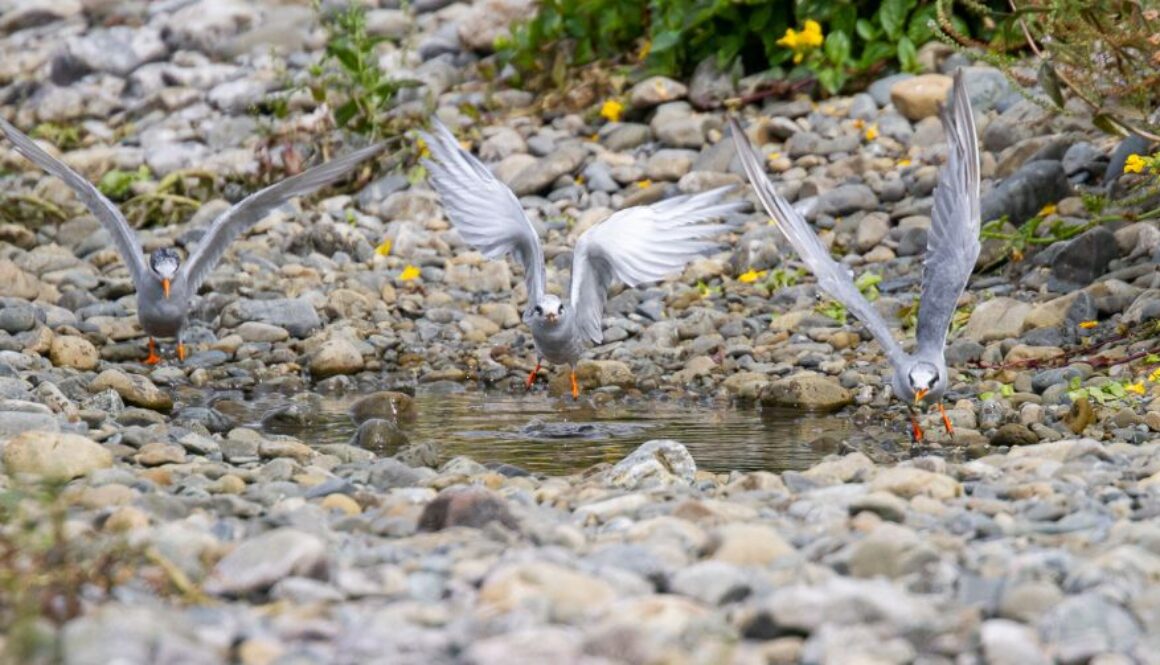
Ashley-Rakahuri Riverbed Group members, Grant Davey and I, have just returned from the local riverbed, where the breeding season for indigenous species such as the ngutupare wrybill and pohowaru banded dotterel has been underway for about a month. We visited a site where much effort has gone into creating a desirable habitat for bird breeding.
Over the winter, prior to the breeding season, a local company, Taggarts Earthmoving Ltd, had extracted shingle from this site. Before they left, they made sure all weeds were removed, as it is well known that most braided river birds must have clean, weed-free shingle on which to nest. And over recent years there has not been the cleansing floods of sufficient size to clear away the increasingly invasive lupins, broom, gorse and blackberry. To complement this removal of the densest weeds, the Group has helped to develop a tractor-mounted undercutter to clear weeds from selected stretches of the river. Not only does the machine uproot weeds, but it creates the loose, coarse shingle surface most favoured by the birds. Our studies have shown that compacted or sandy surfaces are not so attractive to them.
Last August, we used the machine to clear almost 40ha of riverbed. Plus we got Taggarts to channel water across the tail end of their extraction site in order to create an island, which predators would find more difficult to access. However, as the old proverb says ‘one can take a horse to water, but one cannot force it to drink’. It is the same with the birds, one can create what one considers to be desirable nesting sites, but there is no guarantee that they will use them. Past experience has endorsed that.
But, this morning we observed the hoped-for and long-awaited results of our habitat creation endeavours. This is the reason why I sit here in front of my keyboard at home with a wider smile than usual.
As we waded across to the island earlier today, we noticed a movement amongst the stones. It was a female wrybill scuttling away through the stones, the give-away that there must be a nest nearby. So we retreated a short distance, and sure enough she soon came scuttling back and quickly settled down some 40m away. We waited a couple of minutes, taking careful note of the rock shapes and shades adjacent to where she was sitting. We did this, as seeing a wrybill settle on a nest is one thing – actually finding the nest is another. It is just a small-stone lined depression in the shingle and the eggs are the same colour as the grey-wacke rocks surrounding it. But find it we did, and while the adult bird gave us a broken-wing ‘distraction display’ just a few meters from us, Grant used his field tablet to photograph and GPS the nest location.

As we backed off, she quickly returned to shuffle down onto her eggs, appearing so relaxed that Grant crawled forward to take a few close-ups with his point-and-shoot camera. Within barely 10 minutes of first seeing the bird we were happily on our way back to the wagon for the drive home.
Nick Ledgard