
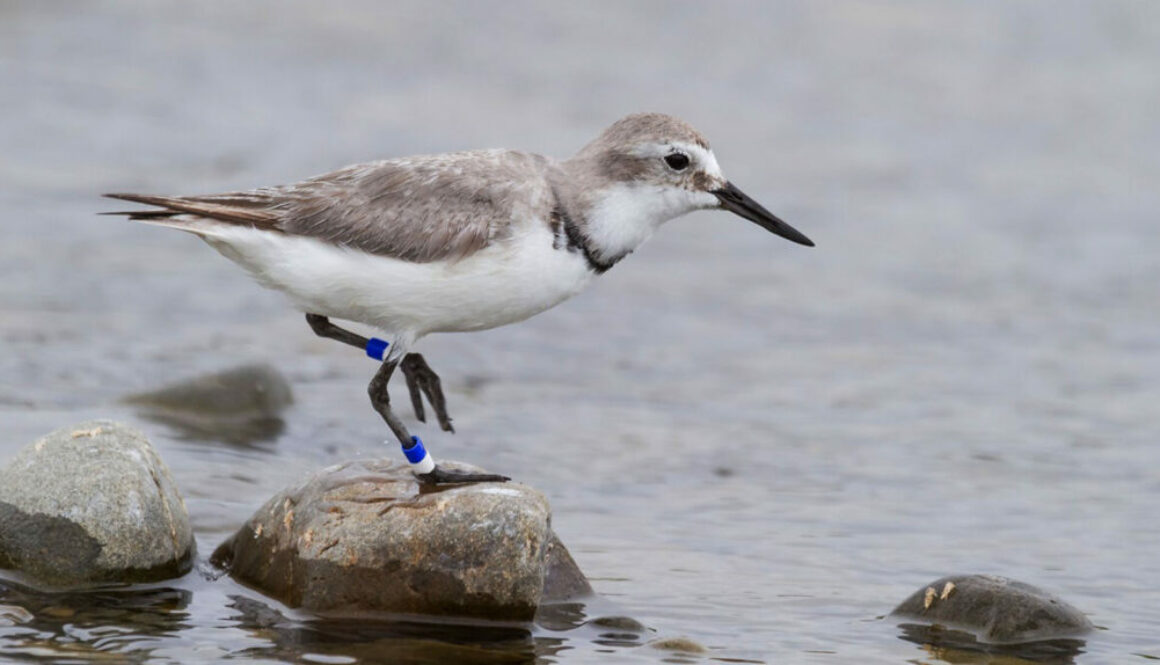
Bird breeding season approaching
From Nick Ledgard
The first of the native birds that annually breed on the Ashley-Rakahuri River are starting to arrive. This morning, I saw 2 pairs of wrybill (including our only banded wrybill (BW-BW) in what I am sure will be their nesting territories just back on the riverbed for his 10th
This year, nesting may be a little delayed, as the riverbed is only just settling down from a fairly large flood a couple of weeks ago. It takes a while for their number one food source, the aquatic insect larvae which live under the stones, to build up numbers. Only about 10% of the stones I turned over today showed signs of insect life.
The flood helped to clear away more weeds, so that there should be no lack of acceptable nesting areas this season. Over the last few weeks the rivercare group has aided this clearance with four mornings of volunteer weed pulling. A total of around 50 people contributed their time to clear about 4ha of riverbed – right in the vicinity where the four wrybill were seen this morning.
We’re also assisting DOC with experimental weed removal using a ripper mounted behind a 4WD farm tractor. We are about to try out the Mark III version, which tows a horizontal angled blade 10-15cm below the riverbed surface. Weed roots are severed at this depth and most end up lying on the ground surface. It is still early days, but if ‘perfected’, this machine should become the most cost-effective means of clearing a hectare of
